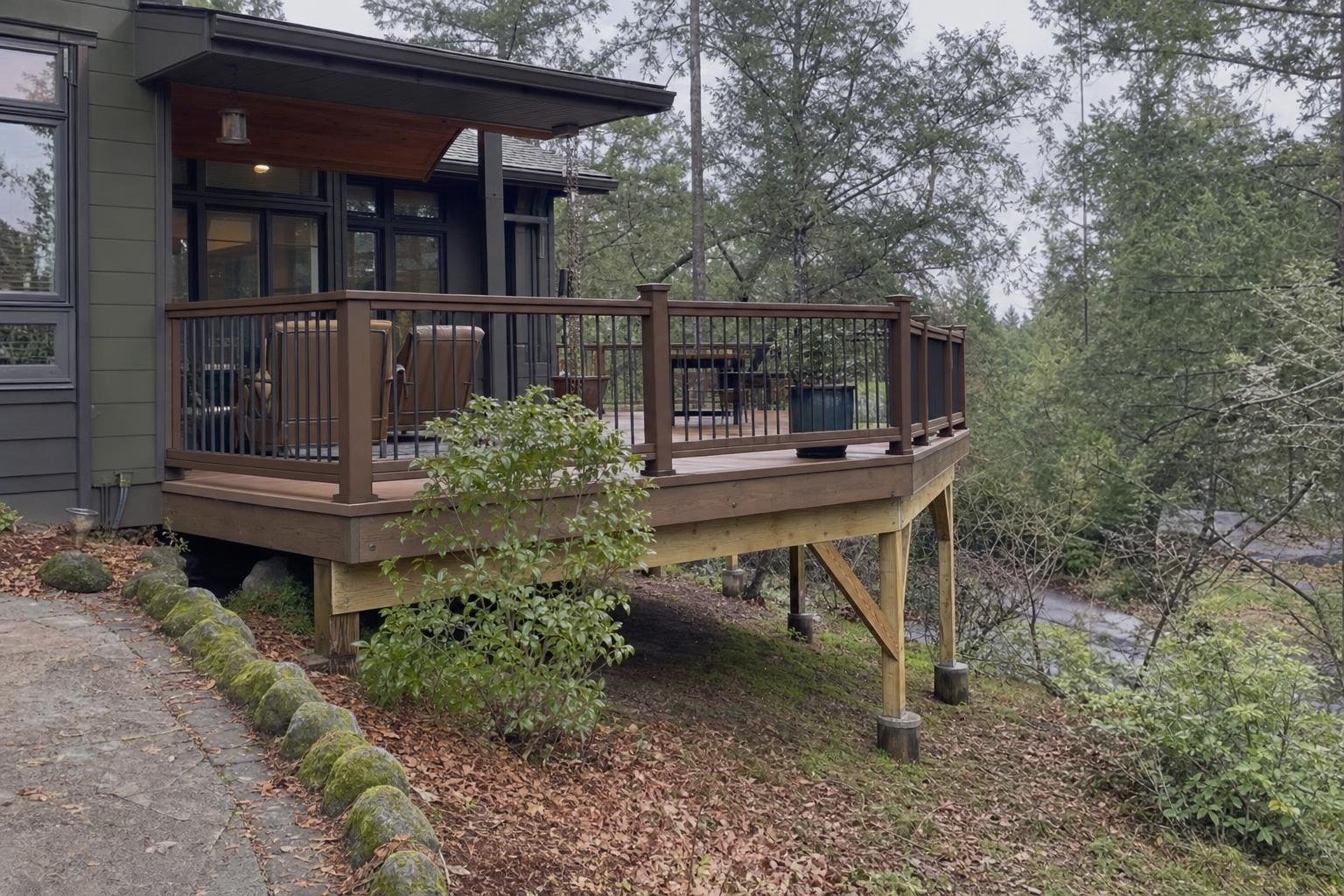
Here are the two figures we can anchor on. Build labor runs $8,500 to $12,750 and a railing system runs $1,450 to $2,750. Your total depends on which of those pieces your deck needs, plus materials. Call us with the rough size, whether the deck attaches to the house, and whether you want railings. A ballpark range comes over the phone, and the firm figure is written up after we've walked the site.
What does deck labor cost, and what does it cover?
Labor is the largest single block in a deck price. It pays for three structural jobs done in order. First we install the posts and beams, which set the primary load path and carry everything above them. Then we install and flash the ledger board where the deck meets the house. Last we set the joists at code-compliant spacing and span, fastening each one with the right hanger or connector.
Joist spacing depends on the decking you choose, the joist size and the load the deck will carry. The quote names the joist spacing and the hangers or connectors. Materials for the framing and the walking surface are listed as their own lines, separate from labor.
When you are ready, composite deck builder is the place to start. Searching for custom deck building in Grants Pass? See our home page.
How much does a railing add?
A railing system adds $1,450 to $2,750. Three things move the price within that range: the railing material, the feet of perimeter that get railed, and the number of corners. A straight run along one side is simple. A deck railed on three sides with several corners takes more cutting, more posts and more fitting.
If your deck sits low to the ground, ask us whether it needs a railing at all. If it doesn't, we'll say so and leave it out.
Why does the ledger get its own line in your quote?
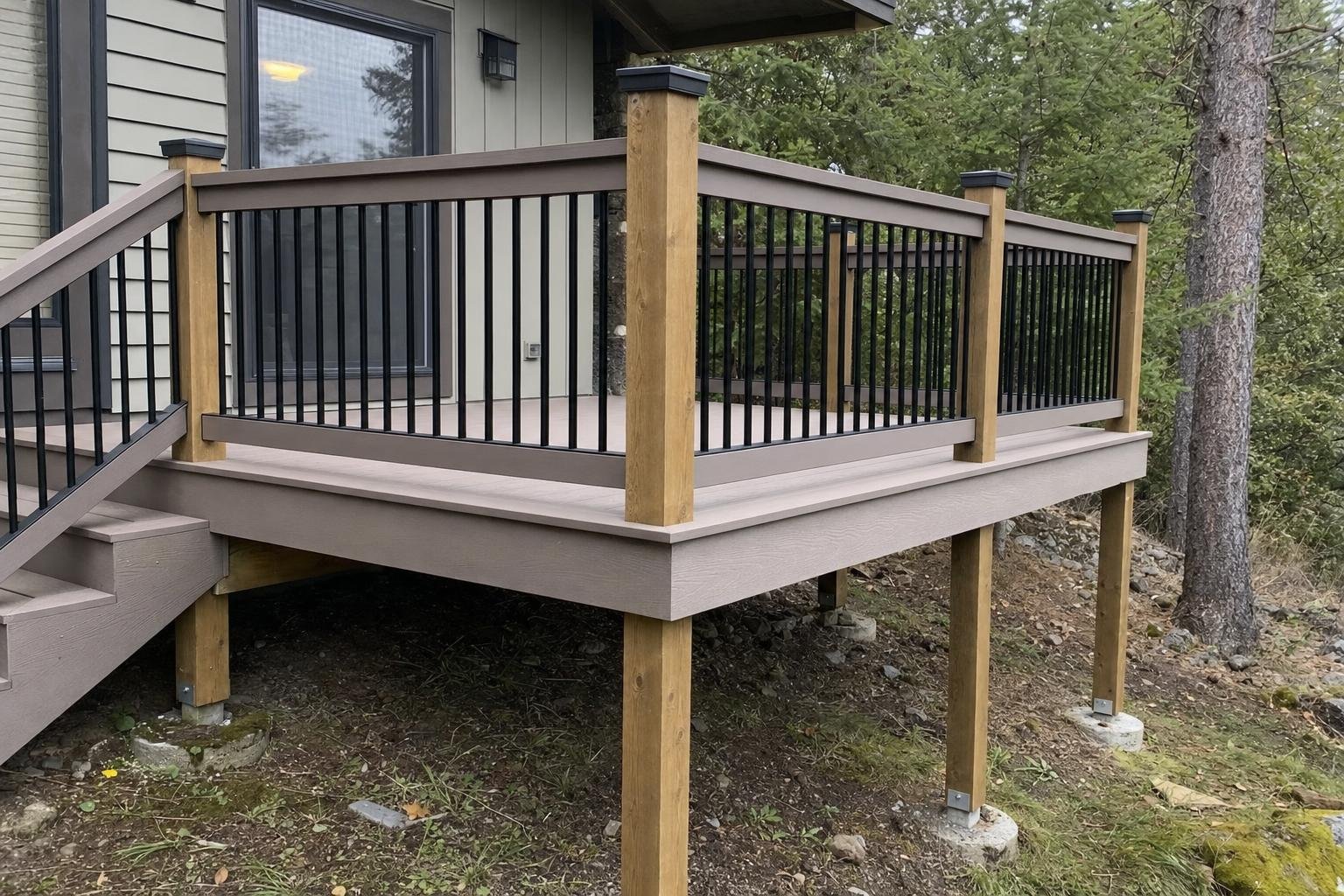
Most houses in Grants Pass are detached single-family homes, so most of the decks we build bolt to the house at a ledger board. That joint is where water gets in if the flashing is wrong. Ledger board flashing directs water out over the connection rather than letting it pool behind the board, and it appears on the quote separately from labor.
Should the house wall need repair before the deck can attach properly, we'll show you the problem and the added cost. You decide before we continue. If the deck stands free of the house, there's no ledger and no ledger flashing, and that line comes off the quote.
Why doesn't a bigger deck cost proportionally more?
Size adds cost in steps, not in a straight line. A larger deck means longer joist spans, and longer spans often call for extra beams or posts to stay within code. That changes the post count, the hardware and the labor to set them. The ledger is the exception. It's one connection to the house whatever the deck size, though a longer one takes more flashing.
Railings follow the perimeter, so they grow with the footprint, and every corner or gate adds fitting time. The surface you choose matters more as the deck gets bigger, because the price difference between decking materials is multiplied across every square foot. Every deck gets its own itemized quote, built from the footprint, the spans and the surface you choose.
What happens when you call?
Give us what you know: a rough footprint, house-attached or freestanding, railings or none. Those details are enough for a ballpark range by phone. We'll then look at the job, confirm the exact number in a written quote, and list labor, railing, ledger flashing and materials separately. You can compare each line against what you expected. Nothing gets scheduled until you've read it.
More Ways We Can Help
Fast Scheduling
A two-minute call is all it takes, and you'll get a clear answer.
Updated October 2026